
What You Need to Know: The Maasai Mara National Reserve is about 5–6 hours' drive or a 45-minute flight from Nairobi. It is best from July to October, when the wildebeest migration is in the reserve, and good for big cats all year. Entry costs US$100 per adult per day from January to June and US$200 from July to December. Plan 3 nights; our itineraries that include it start from US$2,892 per person.
Why Visit the Maasai Mara?
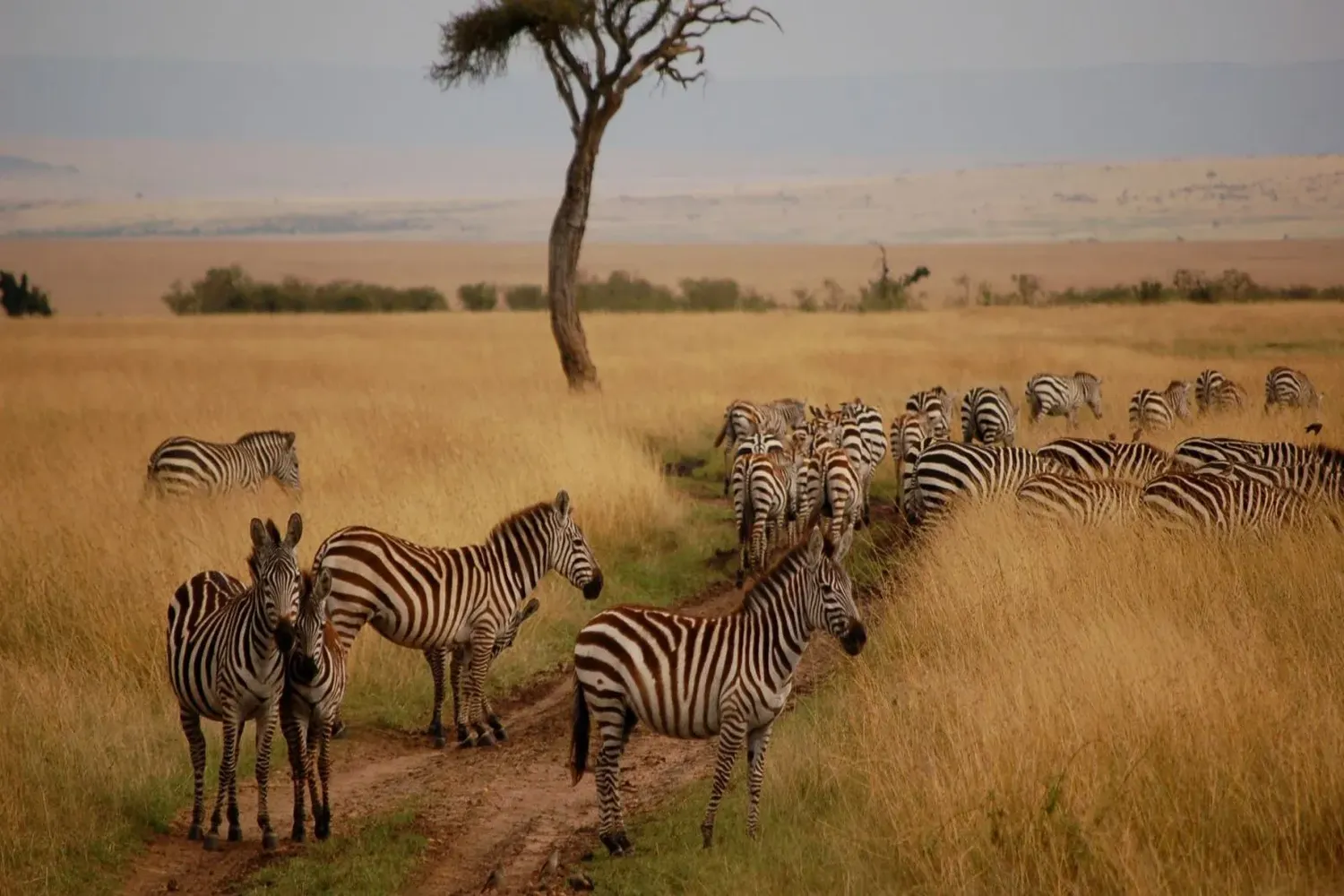
The reserve covers about 1,500 km² of rolling grassland, cut by the Mara and Talek rivers and bordered by private conservancies run with the Maasai landowners. Wildlife is dense all year: lion prides, cheetahs hunting on the open plains, leopards along the rivers, elephants, buffaloes, giraffes, topis and huge numbers of zebras and gazelles.
From about July to October the wildebeest and zebra herds of the Serengeti move north into the Mara, and the crossings of the Mara River, with crocodiles waiting below, are one of the great wildlife sights of the world. Crossings depend on rain and on where the herds are, so they are never guaranteed, but August and September are usually the busiest months.
The Mara is smaller than the Serengeti and closer to an international airport, so it is easy to reach and the wildlife is concentrated. Our Serengeti vs Maasai Mara guide compares the two.
Things to Do at the Maasai Mara
- Full-day game drives with a picnic lunch, following the cats
- River-crossing watch along the Mara River, July to October
- Sunrise hot-air balloon flight, US$460 per person, with a champagne breakfast
- A visit to a Maasai village near the reserve
- Night drives and walks in the private conservancies around the reserve, where they are allowed
How to Get to the Maasai Mara
Most travelers come by road from Nairobi through the Great Rift Valley and Narok; flights from Nairobi's Wilson Airport land at airstrips inside the reserve. From Tanzania, the road border at Isebania–Sirari links the Mara with the Serengeti.
| From | How | Time |
|---|---|---|
| Nairobi | By road through Narok | 5–6 hours |
| Nairobi | Light aircraft from Wilson Airport | About 45 minutes |
| Serengeti (Tanzania) | By road via the Isebania–Sirari border | 6–7 hours from the northern Serengeti |
| Lake Nakuru | By road | 5–6 hours |
When Is the Best Time to Visit the Maasai Mara?
July to October for the migration, with August and September the peak for river crossings. January to March is dry and quieter, with good big-cat viewing and newborn animals. April and May bring the long rains, so roads get muddy and lodge prices fall.
The Maasai Mara Entry Fees
| Fee | 2026 rate (non-resident adult) |
|---|---|
| Maasai Mara National Reserve (Narok County) | US$100 per day January–June, US$200 July–December |
| Children aged 9–17 | US$50 per day |
| Balloon flight (optional) | US$460 per person |
Fees are paid through Kenya's eCitizen system or at the gate and are included in our quotations. Every visitor to Kenya needs an Electronic Travel Authorization (eTA), about US$30–35, applied for at etakenya.go.ke at least 3 days before you fly. Kenya is on the yellow fever list, so carry your certificate if you continue to Tanzania, Uganda or Rwanda.
How Many Days Do You Need for the Maasai Mara?
Three nights gives you two full days in the reserve, enough to explore different areas and wait at the river in season. Two nights is the minimum; four lets you add a conservancy.
Itineraries That Include the Maasai Mara
These private itineraries already include the Maasai Mara; prices are starting prices for 2 travelers at mid-range lodges, and your quotation gives the final price.
| Itinerary | From (per person, 2 travelers) |
|---|---|
| 6-day Tanzania and Kenya safari | US$2,892 |
| 9-day Maasai Mara and Serengeti safari | US$4,338 |
| 9-day Maasai Mara and Rwanda gorilla safari | US$5,938 |
| 10-day Kenya and Uganda gorilla safari | US$5,620 |
| 14-day Kenya and Uganda safari | US$7,798 |
| 14-day Kenya and Rwanda gorilla safari | US$8,348 |
| 13-day luxury Kenya and Tanzania safari | US$11,050 |
Our Kenya trips are planned by us and run on the ground by trusted local partner operators: you get one written quotation and one point of contact, and a private vehicle with a driver-guide for your group only. In Kenya that is a 4x4 Toyota Land Cruiser with a pop-up roof, sliding windows, a fridge and binoculars.
What to Combine with the Maasai Mara
- The Serengeti: cross by road into Tanzania with our Mara and Serengeti safari
- Gorillas: fly from Nairobi to Kigali or Entebbe, as in the Mara and Rwanda safari
- Lake Nakuru and Naivasha: on the road north; see our Lake Nakuru guide
- The coast: fly to Diani for beach days; see our Diani Beach guide
Common Questions About the Maasai Mara
When is the best time to see the river crossings?
Usually August and September, with crossings possible from July to October. They depend on rain and on where the herds are, so no one can guarantee them.
How much does it cost to enter the Maasai Mara?
US$100 per adult per day from January to June and US$200 from July to December in 2026; children aged 9–17 pay US$50, and the fee is the same wherever you stay.
Is the Maasai Mara better than the Serengeti?
Neither is better: the Mara is smaller and easier to reach, the Serengeti is bigger and quieter. Many travelers do both.
Can we fly to the Maasai Mara?
Yes, flights from Wilson Airport in Nairobi take about 45 minutes and land at airstrips inside the reserve.
Is a balloon flight worth it?
For most guests it is a highlight: about an hour over the plains at sunrise, then breakfast in the bush. It costs US$460 per person.
How many days in the Maasai Mara?
Three nights is ideal; two is the minimum.
The Bottom Line
The Maasai Mara is the heart of a Kenya safari: big cats all year and the migration from July to October. Give it three nights, and pair it with the Serengeti or a gorilla trek.
Tell us your dates, the number of travelers and what you want to see, through the booking form, on WhatsApp +255 678 992 599 or by email to jaynevytours@gmail.com, and we will send a written quotation and itinerary.